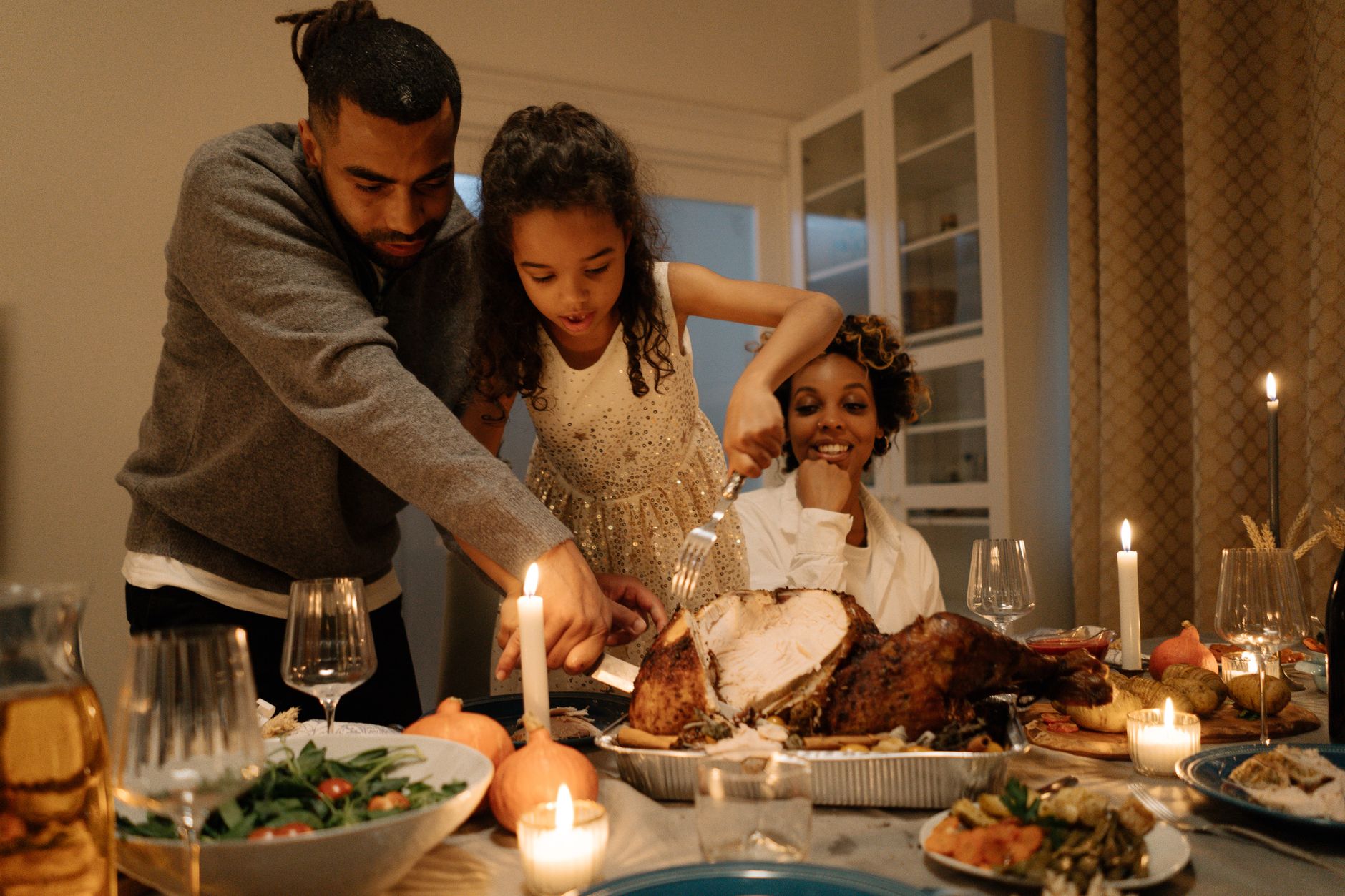
An evolved perspective on Thanksgiving, spiritual freedom, and the moments that matter.
A few years ago, I wrote a blog post about why I no longer wanted to participate in Thanksgiving. I discussed the history we weren’t taught in school, the suffering of Indigenous people, and my discomfort with participating in a holiday that I felt celebrated the very people who colonized this land.
I meant every word.
And I still stand by my decision to question the traditions we’ve inherited, especially when those traditions have been wrapped in feel-good stories that leave out some ugly truths.
But something has changed.
Not my understanding of history. Not my respect for my ancestors. And certainly not my belief that we should think for ourselves instead of blindly following traditions.
What’s changed is my understanding of what I was actually giving up.
And let me tell you, it took some loneliness, a few uncomfortable realizations, and losing people I love to get here.
When Resistance Became Isolation
When I wrote The Buried Facts About Thanksgiving: Feast or Forget?, I was firm in my convictions.
I wasn’t interested in celebrating Thanksgiving on a day designated by the government. I didn’t want to participate in what I viewed as a collective ritual that ignored the violence and suffering of Indigenous people.
As a Black and Indigenous woman who studies metaphysics and honors her ancestors, that history mattered to me. It still does.
I wanted to create my own traditions, celebrate the harvest season, and honor my ancestors on my terms.
The Annual Ritual
But there was another layer to my resistance. I believed Thanksgiving was more than a national holiday. I viewed it as an annual ritual that symbolically continued the celebration of the conquest of Indigenous people.
And from my metaphysical perspective, rituals carry energy. When millions of people participate in the same observance, I believe we’re collectively directing energy toward it, whether we’re conscious of that or not.
So for me, participating wasn’t simply about sitting down to enjoy a meal. I felt like I was contributing my energy to something that went against my spiritual beliefs and my desire to honor my Indigenous ancestors.
That’s why I felt so strongly about not participating on the designated day. I didn’t want to give my energy to what I believed the holiday represented.
Family Participation
There was just one problem.
I wanted my family to resist with me.
And they weren’t having it, LOL.
They weren’t necessarily interested in approaching Thanksgiving the way I did. For them, it was a day to gather, cook, eat, laugh, and enjoy each other’s company.
Meanwhile, I was standing on my principles.
By myself.
And while everyone else was enjoying family and friends, I was feeling lonely.
At first, I told myself that was simply the price of standing firm in my beliefs. But eventually, I started questioning whether I was making the right choice for myself.
Because if I genuinely believe that our connections with other people are among the most important things in life, why was I allowing my resistance to interfere with those connections?
That’s when things started feeling a little foolish.
Not because questioning Thanksgiving was foolish. I still believe the history deserves to be examined and discussed.
But isolating myself from the people I loved? Especially when there were other ways to honor my convictions?
That deserved a second look.
The Memories I Almost Forgot to Value
When I think about Thanksgiving now, some of my first memories have nothing to do with Pilgrims, colonization, or government proclamations.
I remember my grandmother’s kitchen.
As a child, I remember spending days and nights preparing the meal with her. The cooking, the familiar smells filling the house, and all the little things that made home feel like home.
When I was on active duty in the Air Force, coming to Mom’s home for the holidays was something I looked forward to. It was an opportunity to reconnect with my people.
Those moments mattered.
And looking back, I realize that my family wasn’t gathering to celebrate the colonization of Indigenous people. We were gathering because we loved each other.
We were creating memories.
Some of those memories still crack me up.
I have an old picture of my brother absolutely devouring his Thanksgiving plate. That man was handling his business! LOL.
Then there’s another picture of my mom and brother fussing at each other across the dinner table while the boys looked like they were thinking, Oh shit, here they go.
Listen, that’s family!
Everybody isn’t sitting around the table smiling like a holiday commercial. Somebody’s fussing, somebody’s eating, and somebody’s trying to stay out of everybody else’s business.
And years later, those are the pictures that make me laugh.
They’re also the pictures that make me miss my family.
My grandmother is gone. My brother is gone. And earlier this year, I lost my mom.
The people who made so many of those memories special aren’t here anymore.
And that changes how I look at things.
My Mom’s Last Thanksgiving
Last year, I had already started coming around to the idea of cooking and gathering on Thanksgiving again.
I was still working through my feelings about the holiday, but I was becoming more comfortable separating its history from my personal experience.
What I didn’t know was that it would be my mom’s last Thanksgiving.
And she enjoyed every part of that meal!
That memory means so much more to me now.
My mom was a Jehovah’s Witness, so she had her own religious beliefs about holidays. But she enjoyed that food and the experience of being together.
I’m grateful we had that moment.
And when I think about my grandmother, my brother, and my mom, I don’t believe any of them would want me sitting home alone, denying myself an opportunity to enjoy the people who are still here.
I can’t speak for them, of course. But knowing the people they were and remembering the love we shared, that’s what I feel in my spirit.
Grief has a way of changing your perspective.
Things you once thought were so important can start looking a little different when you realize how quickly life changes.
You begin thinking less about making a point and more about making memories.
Because one day, the people sitting around your table become the people you’re remembering.
And you can’t get those moments back.
Was I Honoring My Ancestors or Denying Myself Joy?
Here’s a question I’ve been sitting with:
At what point does honoring the suffering of our ancestors become denying ourselves the joy they fought to preserve?
Whew.
That one made me think.
For years, the history of Indigenous suffering made me feel uncomfortable about putting any energy into Thanksgiving.
I thought about the massacres, the displacement, the attempts to erase Indigenous cultures, and the violence of colonization. I also thought about my enslaved ancestors and the many ways they resisted oppression, even while their oppressors gathered for celebrations.
Those histories are real, even though not every popular story connecting a particular act of violence or resistance directly to Thanksgiving is historically established.
I didn’t want to feel like I was falling in line with indoctrination by participating in a holiday whose popular story leaves so much out.
And honestly, I felt guilty even wanting to participate.
But I’ve been asking myself something different lately.
Does honoring my ancestors require me to deny myself an experience that brings me pure joy?
Does remembering their suffering mean I can’t enjoy a meal with my family on a particular Thursday in November?
I no longer believe it does.
I can acknowledge the violence of colonization without allowing that history to dictate every personal choice I make.
I can honor my Indigenous ancestors and still cherish the memories of cooking Thanksgiving dinner with my grandmother.
And I can remember those who are gone while making room for the people who are still here.
In fact, I’m beginning to see those family connections as part of my ancestral reverence.
My grandmother, my brother, and my mom are now among the ancestors I remember.
Why would I honor them by distancing myself from the very experiences that brought us together?
When Spiritual Awareness Becomes Something to Prove
There’s another part of this experience I had to be honest with myself about.
Some of my resistance was influenced by spiritualists who strongly opposed participating in Thanksgiving.
I understood their perspectives. In many ways, I agreed with them.
But I also became concerned about how other spiritually conscious people might perceive me if I participated.
Would they think I wasn’t aware of the history?
Would they think I had abandoned my convictions?
Would they see me as someone who had fallen back into the very conditioning I claimed to be freeing myself from?
Notice what I just said.
I wasn’t worried that participating would actually make me less spiritually aware.
I was worried about appearing less spiritually aware to other people.
Now, isn’t that something?
Here I was, rejecting a tradition partly because I didn’t want society telling me what to do, while allowing the opinions of other people to influence how I practiced my spirituality.
Different expectations. Same pressure to conform.
And that’s something I needed to examine.
I respect people who choose not to participate in Thanksgiving. I understand their reasons, and I don’t think they owe anybody an explanation.
But that freedom has to work both ways.
If I believe in spiritual freedom, I have to allow myself the freedom to make choices that reflect my own understanding, even when those choices differ from what other spiritualists believe.
My spirituality isn’t something I need to perform for an audience.
I don’t have to prove my awareness by refusing a dinner invitation.
And I don’t have to convince my family to make the same choices I do.
My convictions can stay my convictions.
That’s enough.
A More Intentional Way to Gather
For a while, I considered creating a completely separate holiday, something that would honor resilience, survival, and my Black and Indigenous ancestry.
I even liked the idea of calling it Resilience Day.
But the more I’ve reflected, the more I’ve realized that I don’t necessarily need to name the day at all.
I don’t need another holiday with another set of expectations.
What I want is to approach the day with intention.
This year, I’m spending Thanksgiving with my niece and her family. I’m bringing a dish, and I’m looking forward to enjoying their company.
And I’m doing it without abandoning my spiritual convictions.
When I prepare my dish, I want to be mindful of the energy and love I’m putting into it.
I’ll think about the women who came before me, the meals we prepared together, and the memories we created in those kitchens.
I’ll remember my grandmother.
I’ll remember my mom.
I’ll remember my brother, who clearly knew how to appreciate a good plate of food!
And when I wake up that morning, before joining my family, I’ll take some time for my own spiritual observance.
I want to acknowledge my ancestors, remember the history, express gratitude for the people in my life, and set an intention to be fully present.
Nothing elaborate.
No need to announce it or explain it to everybody at the table.
Just a quiet moment between me, my ancestors, and Spirit.
Then I’m going to enjoy my family.
Eat some good food. Laugh. Talk. Make memories.
And probably bring home a plate for later, because let’s not get carried away, LOL.
The Freedom to Change Your Mind
One thing I’ve learned through this experience is that personal growth sometimes requires us to question our own conclusions.
It’s easy to challenge beliefs we’ve inherited from society, religion, or family.
But what happens when we need to challenge a belief we’ve chosen for ourselves?
That can be a little harder.
Especially when we’ve publicly expressed that belief, defended it, and encouraged other people to see things our way.
I wrote that original Thanksgiving article in 2022 because I wanted people to think critically about the traditions they participate in.
I still want that.
But critical thinking doesn’t stop once we arrive at a conclusion we feel strongly about.
We have to remain willing to examine how our beliefs are affecting our lives.
Are they helping us live according to our values?
Or have we become so attached to a particular position that we’ve stopped noticing what it’s costing us?
For me, the cost was connection.
And after losing so many people I love, connection is something I don’t want to take for granted.
I don’t regret learning the history. I don’t regret questioning Thanksgiving. And I don’t regret the spiritual growth that came from examining traditions I once accepted without much thought.
But I do wish I’d recognized sooner that I didn’t have to choose between honoring my ancestors and enjoying my family.
Both could exist.
I just needed to give myself permission.
Final Thoughts
I still don’t celebrate the Thanksgiving story we were taught in school.
I still believe we should question historical narratives, acknowledge Black and Indigenous peoples’ suffering, and examine the traditions we’ve inherited.
And I still believe we have every right to create our own traditions or reject holidays that don’t align with our values.
But I’ve also learned that resistance isn’t always about refusing to participate.
Sometimes it’s about deciding for yourself what your participation means.
I don’t need the government to tell me when to give thanks. And I don’t need other spiritualists to tell me how to honor my ancestors.
I can choose to gather with my family on Thanksgiving because that’s when we’re available, without accepting every meaning society attaches to the day.
I can prepare a meal with intention, remember my ancestors privately, and enjoy the people I love openly.
And I can do all of that without guilt.
Looking back at those old family pictures, I don’t see a holiday I should have been resisting.
I see my brother enjoying his food. I see my mom fussing at him. I see the boys trying not to get caught in the middle.
I see people I love.
And I see memories I wouldn’t trade for anything.
There will be people who continue to reject Thanksgiving entirely, and I respect that. There will be people who celebrate without giving its history much thought. That’s their choice, too.
As for me, I’m choosing intention over obligation, connection over isolation, and the freedom to honor my beliefs in a way that makes sense for my life today.
Because my convictions can stay my convictions.
My memories can stay my memories.
And this year, I’m going to make some more.

Share your thoughts…respectfully of course.